The Era of Godfathers
It's interesting how gangsters and mafias have taken over significant portions of the film industry.
Ten years ago that comment would have meant something different: gangsters were financing films in a big way back then. That has changed, partially thanks to the official classification of the Bombay film industry as an industry, which makes film financing through regular means easier.
What I mean here is gangster films: movies that have Bombay-style mafias and gangsters as a central plot element. I don't quite know which movie started the trend: early ones include Parinda, Satya and Company. I think of Satya as the one that started the trend, though Parinda was an earlier film. The trend migrated from Bombay to the Telugu film industry. At least, I think that's the direction it went although Ram Gopal Varma - director of Satya - started off in Hyderabad.
I view this genre as separate from other movies which feature outlaws in central roles, such as Robin Hood-themed films. The gangster genre usually has a remarkably uniform depiction of gangster organizations. There's an all-powerful ganglord surrounded by subservient subordinates at various layered levels. There are a few trusted lieutenants, some people below them, and the rank and file. Some films within this genre depict the gangsters as fundamentally honourable people, others depict them as lacking any sense of ethics, so perhaps you could divide it into sub-genres.
What's amazing is the number of films featuring such organizational setups, both in Bombay and Hyderabad.
Showing posts with label Rants. Show all posts
Showing posts with label Rants. Show all posts
Sunday, July 27, 2008

Friday, July 25, 2008
Observation/Rant #002
The Age of Strained Accents
I don't think anybody can have missed it, but most of the top lead actresses in the Telugu film industry aren't Telugu any more. Shriya, Kamalini, Genelia, Ileana, Charmy, Kajal, Tabu (who could be an exception since she's from Hyderabad), Sonali Bendre, Trisha - they're from everywhere but Andhra. A few lead actors (Siddharth Narayan for example) are from out-of-state but most are Telugu.
Now there's absolutely nothing wrong with non-Telugu people acting in the Telugu industry. If out-of-state actors have talent they are bound to be an asset to the industry, raising acting standards and contributing in various other professional and cultural ways. And I think that the current crop of actors and actresses have really contributed in a big way. If anything, I think there should be even more out-of-state actors in the Telugu industry. But one thing that does happen is we get to hear Telugu spoken with really odd accents. Voices are dubbed in many cases, but not always - and then we get to hear some annoyingly tamasha Telugu.
Now I love local Telugu accents and dialects as much as any one - they're interesting and keep things real. But these aren't local accents; they're just poorly spoken Telugu that happens when Telugu is written in Devanagari or Tamil or whatever and the actors try to read it without any experience with the language. And there just doesn't seem any sign that directors care; even Sekhar Kammula's films have some really weird diction. I still have hopes for Chandra Sekhar Yeleti (of Anukokunda Oka Roju fame); if he keeps making movies with the kind of attention to detail we see in that movie, he'd probably take care to avoid bad accents.
I don't think anybody can have missed it, but most of the top lead actresses in the Telugu film industry aren't Telugu any more. Shriya, Kamalini, Genelia, Ileana, Charmy, Kajal, Tabu (who could be an exception since she's from Hyderabad), Sonali Bendre, Trisha - they're from everywhere but Andhra. A few lead actors (Siddharth Narayan for example) are from out-of-state but most are Telugu.
Now there's absolutely nothing wrong with non-Telugu people acting in the Telugu industry. If out-of-state actors have talent they are bound to be an asset to the industry, raising acting standards and contributing in various other professional and cultural ways. And I think that the current crop of actors and actresses have really contributed in a big way. If anything, I think there should be even more out-of-state actors in the Telugu industry. But one thing that does happen is we get to hear Telugu spoken with really odd accents. Voices are dubbed in many cases, but not always - and then we get to hear some annoyingly tamasha Telugu.
Now I love local Telugu accents and dialects as much as any one - they're interesting and keep things real. But these aren't local accents; they're just poorly spoken Telugu that happens when Telugu is written in Devanagari or Tamil or whatever and the actors try to read it without any experience with the language. And there just doesn't seem any sign that directors care; even Sekhar Kammula's films have some really weird diction. I still have hopes for Chandra Sekhar Yeleti (of Anukokunda Oka Roju fame); if he keeps making movies with the kind of attention to detail we see in that movie, he'd probably take care to avoid bad accents.
Monday, July 21, 2008
Observation/Rant #001
The Land of the Moustachioed Men
 Watching Telugu movies, one comes to the incongruous conclusion that Telugu men are quite fond of their moustaches. Just as Japan is the Land of the Rising Sun and the USA is the Land of the Free, I think Andhra Pradesh deserves its own epithet. Join me in applauding the Land of the Mustachioed Men.
A conversation with the typical Telugu male confirms the hypothesis that moustaches are dear to the male Telugu heart. "Are you not a man?" I've heard some ask. "Moustaches are the mark of men." You've got to applaud the few male Telugu actors who dare to appear without one. Most of them compensate by sporting an unkempt 2-3 day stubble at several points in the movie, presumably to convince the Telugu viewer that they are indeed worthy of respect as a fellow man.
 Watching Telugu movies, one comes to the incongruous conclusion that Telugu men are quite fond of their moustaches. Just as Japan is the Land of the Rising Sun and the USA is the Land of the Free, I think Andhra Pradesh deserves its own epithet. Join me in applauding the Land of the Mustachioed Men.
A conversation with the typical Telugu male confirms the hypothesis that moustaches are dear to the male Telugu heart. "Are you not a man?" I've heard some ask. "Moustaches are the mark of men." You've got to applaud the few male Telugu actors who dare to appear without one. Most of them compensate by sporting an unkempt 2-3 day stubble at several points in the movie, presumably to convince the Telugu viewer that they are indeed worthy of respect as a fellow man.
Sunday, July 13, 2008
Telugu Cinema: Variety Entertainment
Pursuant to my rant about maturity in Telugu films, I've come to a realization about the Telugu film industry. Calling most Telugu movies a "Film" or the industry "Cinema" is not consistent with the way the term is normally used in other film industries.
Usually a film refers to a coherent piece of work, an invention that is internally uniform and distinguishable from other pieces of work in its ethos, not just because it is on the same physical tape or disc. The story, plot, screenplay, cinematography, or a combination of these and other elements serve to give it a distinct character. You can't take a piece of one film and put it into a different film and have it make sense in the new context.
Movies in the Hindi and Telugu film industries often aim at a different ideal. When people from abroad stare in amazement at Indian cinema and wonder why there is a song-and-dance sequence all of a sudden, what they are missing is this: an Indian film is essentially variety entertainment. This kind of entertainment has been popular traditionally in India for centuries; a troupe of entertainers traveling from town to town putting on stage shows, with music, dance, acrobatics, a bit of drama, clowns and buffoonery, all thrown in.
The Indian movie is often a simple migration of this centuries-old motif to a different medium. The plot or story, if anything, only serves to hold the audience's interest and to give the movie a natural ending. The main offering is the song-and-dance routines, the music, the fights. Indeed, many Telugu movies are reviewed this way: not holistically, but as separate departments: songs, fights, comedy, dialogues, photography. A review might read: "Dialogues in this film are very good. First half has non-stop comedy. Fights by Peter Hynes are excellent. Photography is terrific. Dancing by hero and heroine is very well choreographed. The hero's style is terrific, he lives up to his image of Prince Charming with his mesmerizing looks (sic). The heroine is in her element with traditional costumes and cute mannerisms." And so on. "She is sensuality personified," says one review about the lead actress in a movie. "Her wardrobe in this film includes dresses ranging from traditional sarees to mini skirts." Hmm.
Usually a film refers to a coherent piece of work, an invention that is internally uniform and distinguishable from other pieces of work in its ethos, not just because it is on the same physical tape or disc. The story, plot, screenplay, cinematography, or a combination of these and other elements serve to give it a distinct character. You can't take a piece of one film and put it into a different film and have it make sense in the new context.
Movies in the Hindi and Telugu film industries often aim at a different ideal. When people from abroad stare in amazement at Indian cinema and wonder why there is a song-and-dance sequence all of a sudden, what they are missing is this: an Indian film is essentially variety entertainment. This kind of entertainment has been popular traditionally in India for centuries; a troupe of entertainers traveling from town to town putting on stage shows, with music, dance, acrobatics, a bit of drama, clowns and buffoonery, all thrown in.
The Indian movie is often a simple migration of this centuries-old motif to a different medium. The plot or story, if anything, only serves to hold the audience's interest and to give the movie a natural ending. The main offering is the song-and-dance routines, the music, the fights. Indeed, many Telugu movies are reviewed this way: not holistically, but as separate departments: songs, fights, comedy, dialogues, photography. A review might read: "Dialogues in this film are very good. First half has non-stop comedy. Fights by Peter Hynes are excellent. Photography is terrific. Dancing by hero and heroine is very well choreographed. The hero's style is terrific, he lives up to his image of Prince Charming with his mesmerizing looks (sic). The heroine is in her element with traditional costumes and cute mannerisms." And so on. "She is sensuality personified," says one review about the lead actress in a movie. "Her wardrobe in this film includes dresses ranging from traditional sarees to mini skirts." Hmm.
Saturday, October 20, 2007
Classics Massacred
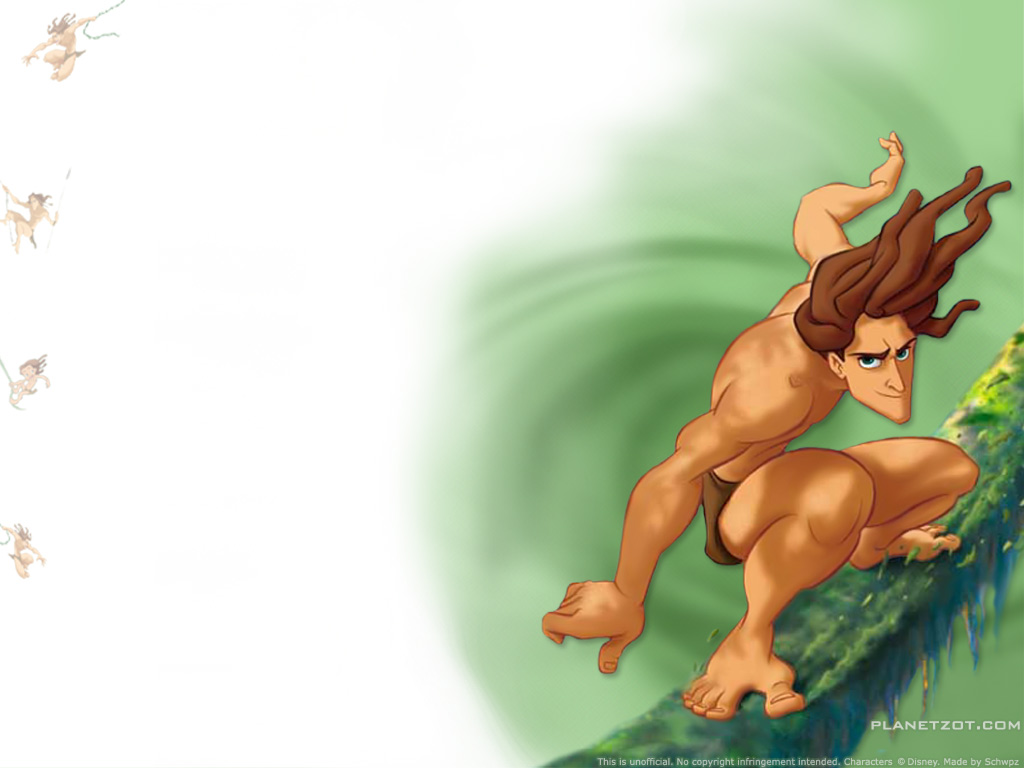

Cinema has a way of bringing some great books to life, while destroying some other classics.
Success stories include the Lord of the Rings trilogy, which, while it's not as good as the original, still made the story accessible in a good way to many people. Two of the failures which bother me -- because I loved the originals -- are Tarzan and Flash Gordon.
Disney's Tarzan is the worst type of destruction, because it fundametally changed the nature of the character. Tarzan was not a wimpy nice-guy. Tarzan was essentially a wild animal with intelligence and a sense of honour. And Tarzan did not skateboard on tree branches.
The other massacre is with Sci-Fi Channel's current series, Flash Gordon, based on the comic strip. The character of Flash Gordon himself is intact, but Zarkov's character is completely destroyed. The original Zarkov was a scientist, true, but he was very far from the sniveling coward in the TV series. He was, if anything, more decisive than Flash, a daring fighter. It is sad to see what the character has been reduced to. Perhaps there's something in someone's psyche that needs a geeks vs. jocks dichotomy in order to make sense of the world? Other than this, Ming's original character is much more fearsome than the tame Ming in the TV series. The planet Mongo is very poorly realized, although this may be a result of scarce production resources rather than lack of talent.
Sunday, September 30, 2007
Telugu Cinema and Maturity
Something has been wrong with Telugu cinema for a while. A long time ago, especially during the black-and-white era, the films used to be great. The acting was theatrical rather than realistic in those days, but the stories were good and the films were coherent. Sometime in the 70s or 80s, films in the Telugu industry took a turn for the worse. To be fair, this happened to all Indian films... late 80s Hindi films are often unwatchable. But around the end of the 90s, Bollywood began redeeming itself. Most of the films are still incoherent and meaningless, but they began making a few really good ones.
The Telugu industry still seems stuck in the 80s mold of incoherent, shark-jumping plots, gratuitous violence, and songs that are jarringly out of place. Instead of improving, the Telugu industry seems to be getting worse. The violence is more mindless, the plagiarism and stitching together of individual scenes from Hindi and Hollywood films has reached a point where some films feel like incoherent patchwork, and even the Telugu language is being massacred in many of the recent ones. The Telugu industry has also not realized the importance of theme music in a film (i.e. the background score, not the songs).
Examples of this include Pokiri, which is full of unrealistic and meaningless violence. Maaya Bazaar, a recent film (not related to the original), is a movie with a decent idea but is poorly directed, full of maudlin sermonizing and silly fight scenes. Aite is a recent film with a good idea but ordinary execution and very poorly spoken Telugu. Gajani is a rip-off of the Hollywood movie Memento, but is poorly executed and seems a little irrelevant in the Indian situation.
Perhaps it is silly to blame the industry, which is simply producing what the people want. But I believe it must be possible to make a popular film that is also good from a theoretical, critical viewpoint. Bollywood has done it, and the Tamil industry is following suit. That Telugu cinema can do it is evidenced by the large number of excellent movies produced in the past, and the occasional blips of excellence like Godavari. It is time Telugu cinema pulled itself out of the 1980s morass.
The Telugu industry still seems stuck in the 80s mold of incoherent, shark-jumping plots, gratuitous violence, and songs that are jarringly out of place. Instead of improving, the Telugu industry seems to be getting worse. The violence is more mindless, the plagiarism and stitching together of individual scenes from Hindi and Hollywood films has reached a point where some films feel like incoherent patchwork, and even the Telugu language is being massacred in many of the recent ones. The Telugu industry has also not realized the importance of theme music in a film (i.e. the background score, not the songs).
Examples of this include Pokiri, which is full of unrealistic and meaningless violence. Maaya Bazaar, a recent film (not related to the original), is a movie with a decent idea but is poorly directed, full of maudlin sermonizing and silly fight scenes. Aite is a recent film with a good idea but ordinary execution and very poorly spoken Telugu. Gajani is a rip-off of the Hollywood movie Memento, but is poorly executed and seems a little irrelevant in the Indian situation.
Perhaps it is silly to blame the industry, which is simply producing what the people want. But I believe it must be possible to make a popular film that is also good from a theoretical, critical viewpoint. Bollywood has done it, and the Tamil industry is following suit. That Telugu cinema can do it is evidenced by the large number of excellent movies produced in the past, and the occasional blips of excellence like Godavari. It is time Telugu cinema pulled itself out of the 1980s morass.
Subscribe to:
Posts (Atom)